
Balance Over Time: The Jedi, the Sith, & the Philosophy That Learned to Doubt Itself
Dodd Loomis
MAY 1, 2026
When Star Wars arrived in 1977, George Lucas did something deceptively simple. Drawing on the work of Joseph Campbell, a scholar who studied myths from cultures around the world and noticed that many of them share a common structure, Lucas built a story that felt less invented than remembered.
Campbell called this structure “The Monomyth,” or “The Hero’s Journey.” A young, untested figure is called out of ordinary life, guided by mentors, tested by trials, forced to confront darkness, and ultimately transformed. It is not just a sequence of plot events. It is a moral universe, built from story patterns that appear across cultures and centuries, and that audiences recognize because they speak to something deeply human.
It assumes that growth comes through ordeal, that wisdom requires discipline, and that the hero succeeds not merely by defeating the world outside him, but by mastering the storm inside himself.
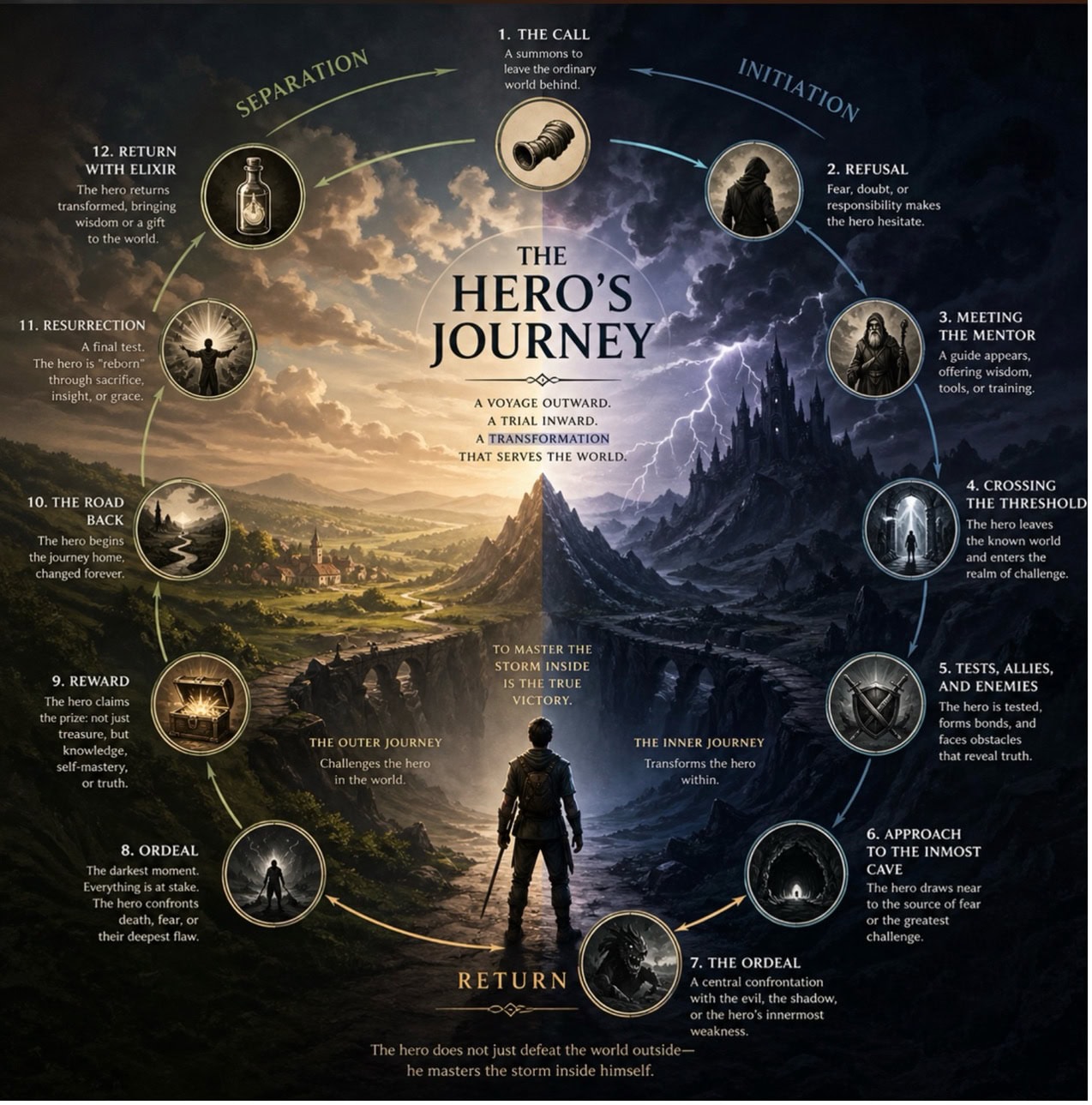
Star Wars borrows this structure unapologetically. It takes the ancient shape of the Hero’s Journey and makes it immediate, accessible, and almost instantly relatable. Each audience member can find themselves somewhere inside this ubiquitous story.
A farm boy leaves home and becomes the Hero. A wise teacher guides him toward discipline and self-knowledge. A fallen warrior embodies the danger of power without restraint. A mystical Force connects all living things and rewards balance over domination. Lucas was using story patterns audiences already knew, even if they could not name them, because they had encountered versions of them all their lives in fairy tales, religious stories, adventure serials, folklore, and myth. The film feels new on the surface, with spaceships, droids, lightsabers, and alien worlds, but underneath, its structure is ancient.
This is not because the story is simplistic. It is because Lucas pulls from patterns that are universal, trans-cultural, and old beyond any one civilization’s ownership. The child called to adventure, the mentor at the threshold, the descent into danger, the confrontation with the shadow, the temptation of power, the return of the hero transformed forever. These tropes have appeared across continents and millennia because they describe a physical, mental, and emotional journey humans recognize in themselves.
That is why the original Star Wars works so quickly. It does not ask us to learn a new moral language. It speaks one we already know.
And within that language, the Jedi are the moral center.
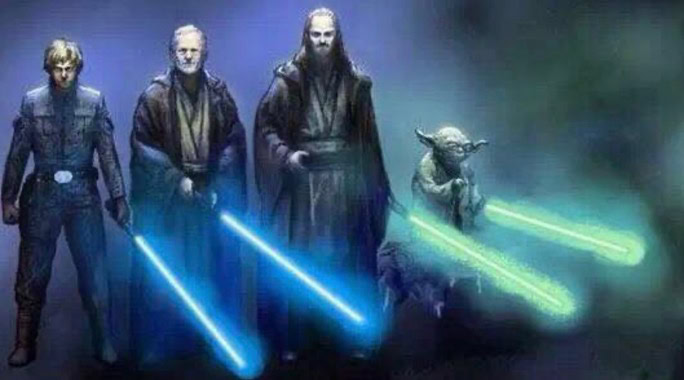
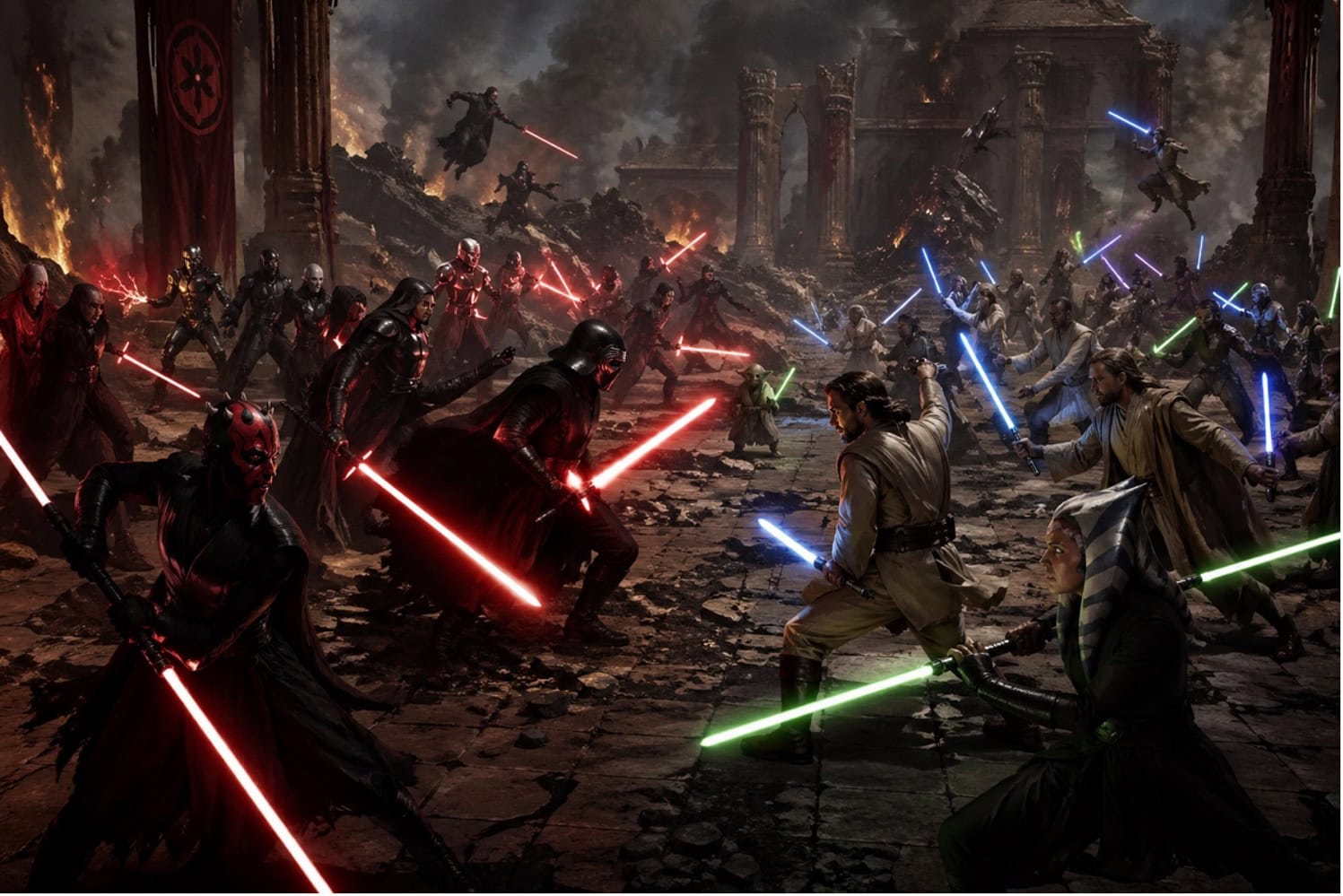
The Jedi are not merely the heroes’ team. They are presented as the moral solution to the central danger of the Star Wars universe: power.
They are an ancient order of Force-sensitive guardians, part monk, part knight, part spiritual diplomat. They can move objects with their minds, sense danger, influence thought, glimpse the future, and wield lightsabers with impossible precision. But the original moral logic of Star Wars insists that these abilities are not what make them admirable. Power alone does not make someone wise. Power alone, in fact, may be exactly what makes someone dangerous.
The Jedi ideal is that extraordinary power must be disciplined by extraordinary restraint. A Jedi is meant to serve rather than rule, to defend rather than dominate, to act from calm rather than impulse. The Force is not supposed to be bent to the Jedi’s private desire. The Jedi is supposed to bring himself into alignment with the Force.
That is why emotional control matters so much to them. Fear, anger, vanity, possessiveness, grief, pride, and unchecked desire are not treated as ordinary human complications. They are treated as openings through which power can become corruption. A person without the Force may be damaged by fear or rage, but a person with the Force can turn fear or rage into catastrophe.
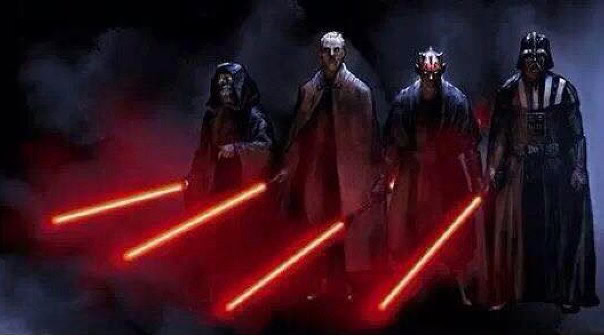
The Sith, by contrast, are introduced as the opposite answer to the same problem. If the Jedi believe power must be restrained by service, the Sith believe power must be awakened, intensified, and directed through passion. The Jedi fear anger, desire, grief, pride, and attachment because those emotions can distort judgment and lead to corruption. The Sith look at those same emotions and draw the opposite conclusion. They do not see their intensity as a reason to bury them. They see it as evidence of their power. They do not suppress their emotions. They unbridle them.
This is the central seduction of Sith philosophy: the very feelings the Jedi suppress become, in Sith hands, sources of extraordinary power. Fear becomes alertness. Anger becomes force. Desire becomes direction. Pain becomes endurance. Attachment becomes obsession. The Sith do not seek peace with the self. They tear the self open and use whatever they find.
That is why they are so frightening, and why they are so compelling. The Sith do not merely reject Jedi restraint. They prove, again and again, that the emotions the Jedi fear are incredibly powerful. Where the Jedi seek harmony, the Sith seek strength. Where the Jedi fear attachment, the Sith allow attachment to sharpen desire, purpose, and will. Where the Jedi subordinate the self to something larger, the Sith cultivate the self as the engine of action. They do not see fear, anger, grief, pride, or longing as impurities to be purged. They see them as forces to be faced, claimed, and converted into strength.
This is why the Sith function as the Jedi’s true philosophical enemy, not merely their military enemy. The Sith are not just bad people with red lightsabers. Through a Jedi lens, they are the nightmare version of a Force user: gifted beings who reject restraint, unleash the emotions the Jedi subvert, and discover that those emotions can make them terrifyingly strong.
But even here, the deeper conflict is not mastery versus chaos. Both the Jedi and the Sith believe they are pursuing mastery. They simply disagree about what mastery requires.
For the Jedi, self-mastery means disciplining the dangerous emotions until they can be quieted and brought into harmony with the Force. For the Sith, self-mastery means facing those same emotions directly, releasing them, and converting them into strength. The Jedi seek mastery through restraint. The Sith seek mastery through intensity.
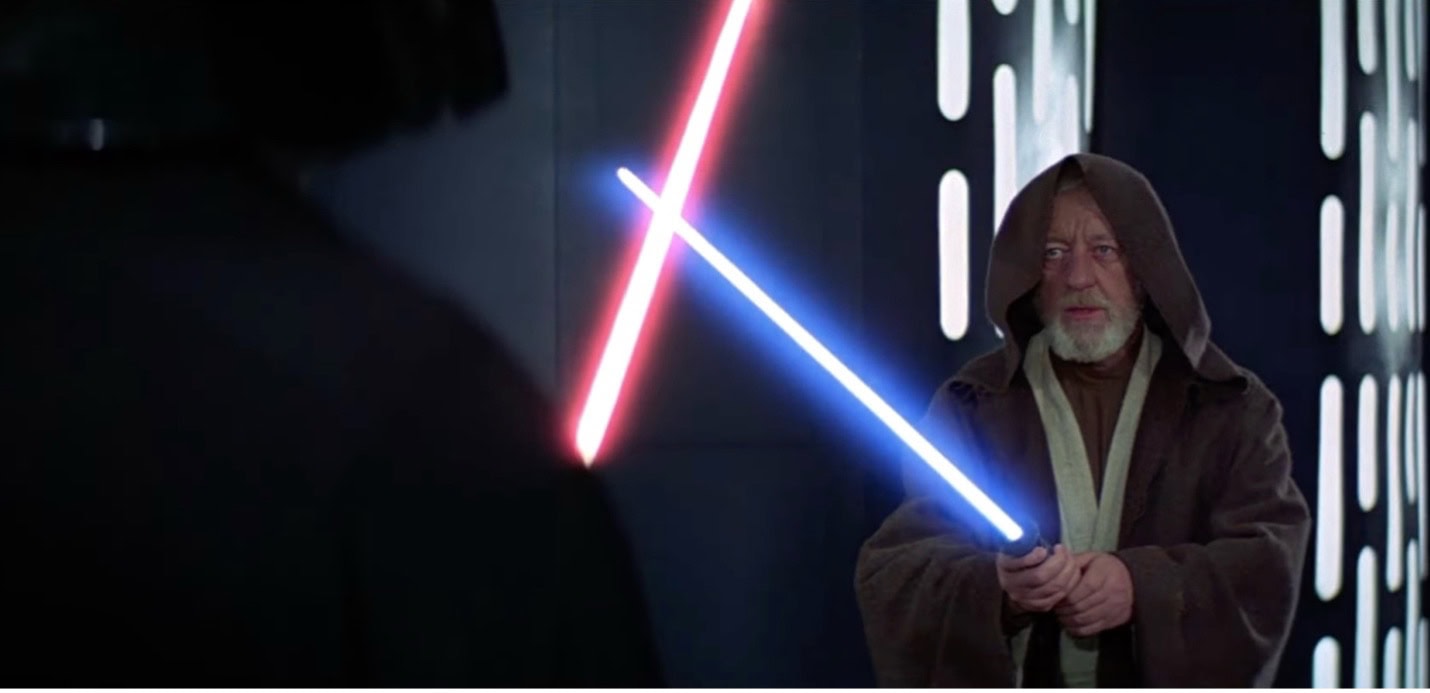
The myth of the original Star Wars depends on this moral arrangement. At first, the Jedi represent mastery and the Sith represent corruption. The hero’s task is not simply to survive the battle, defeat the villain, or overthrow the Empire. He must also master the forces inside himself: an endless swirl of big emotions and the hunger for control. The original moral claim of Star Wars is that the Jedi path is the proper way to achieve that mastery. The dangerous emotions must be disciplined, quieted, and brought into harmony with the Force. The Sith appear, at first, as the failure of that task: the self overcome by the very forces it was meant to master.
But the Sith do not believe they have abandoned self-mastery. They believe they have found a more honest route to it. Where the Jedi seek mastery by restraining dangerous emotions, the Sith seek mastery by facing them, embracing them, and converting them into power.
Both traditions are trying to answer the same question: what should a powerful being do with the storm inside himself?
That is the myth Star Wars begins with.
It is also the myth the rest of the franchise spends the next forty years slowly taking apart.
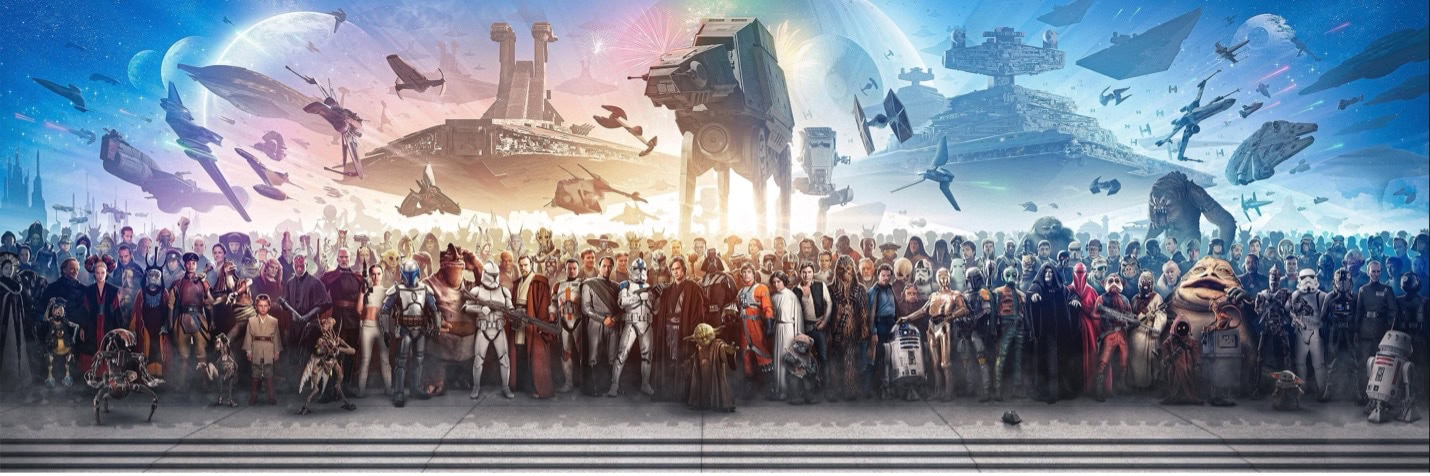
Not by rejecting it entirely. That would be too easy, and much less interesting. The later films keep the original myth alive while forcing it into messier conditions. They ask what happens when the Jedi philosophy becomes an institution. They ask whether emotional control can become emotional denial. They ask whether passion is always corruption, or whether the Sith, buried under all that violence and tyranny, are naming something the Jedi refuse to understand. They ask whether either system has made enough room, or any at all, for compassion.
The franchise matures because it becomes suspicious of its own first answer.
In the original trilogy, (Star Wars: Episode IV: A New Hope – 1977, Star Wars: Episode V: The Empire Strikes Back – 1980, Star Wars: Episode VI: Return of the Jedi – 1983) the moral universe is clean.
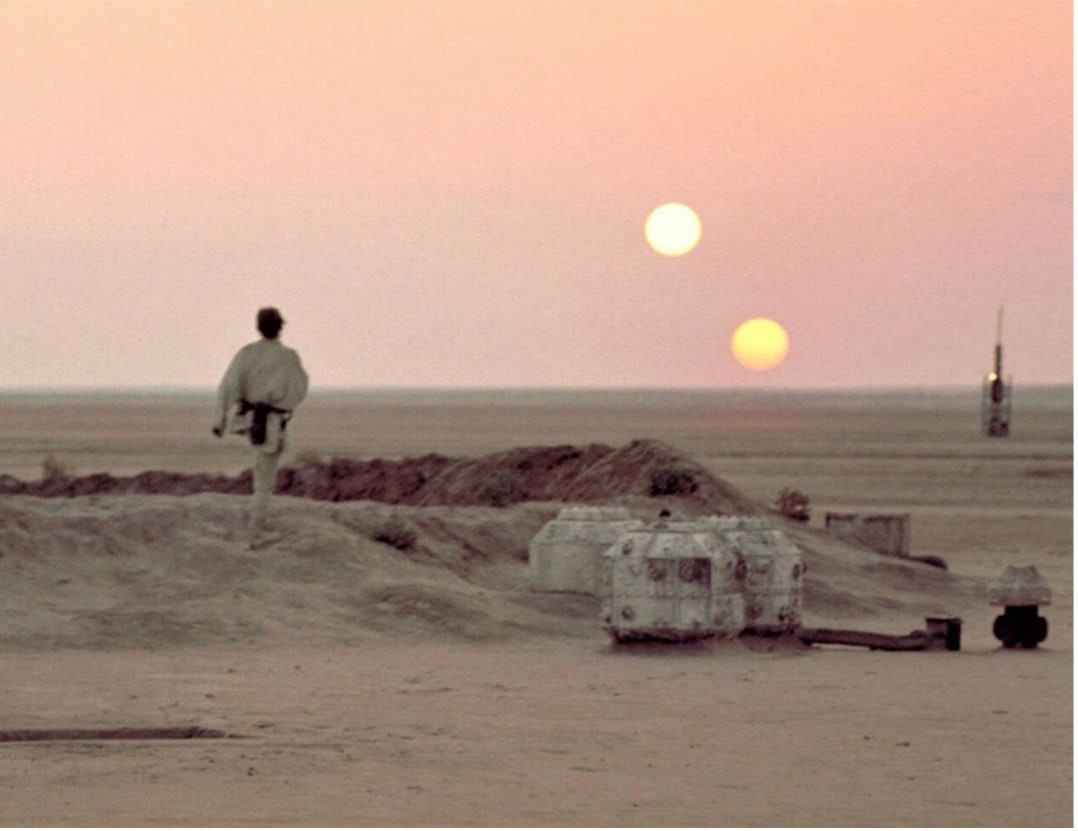
The Jedi represent discipline, restraint, and service. The Sith represent anger, ambition, and domination. Luke Skywalker’s journey is the journey from impatience toward self-command. He begins as a restless boy staring at the horizon, desperate for significance. He wants adventure before he understands the cost of it. His training requires him to slow down, to listen, to trust, to see beyond impulse.
Yoda’s teachings in The Empire Strikes Back seem, at first, almost perfectly wise. Luke is reckless. He rushes toward danger before he is ready. He wants power before he has earned understanding. He sees the Force as a tool, and Yoda teaches him that it is not a trick or weapon, but a way of perceiving, a way of being. The Jedi path, in this context, feels like the necessary correction to youth. Be still. Be patient. Do not let fear decide for you.
And the Sith prove the warning. Darth Vader is not just a villain. He is a living cautionary tale: the wreckage of a gifted boy who became power without tenderness, discipline without mercy, machinery where a person used to be.
The Emperor is worse still, not merely violent but delighted by corruption, and enamored with his own cruelty. He does not simply want Luke dead. He wants him to kill in hatred, to win by losing his soul.
So when Luke refuses, the moment feels complete.
Luke defeats the Emperor’s logic by rejecting the premise. He will not murder his father in anger. He will not become powerful at the cost of becoming hollow. Luke throws away his lightsaber and in that moment declares himself a Jedi.
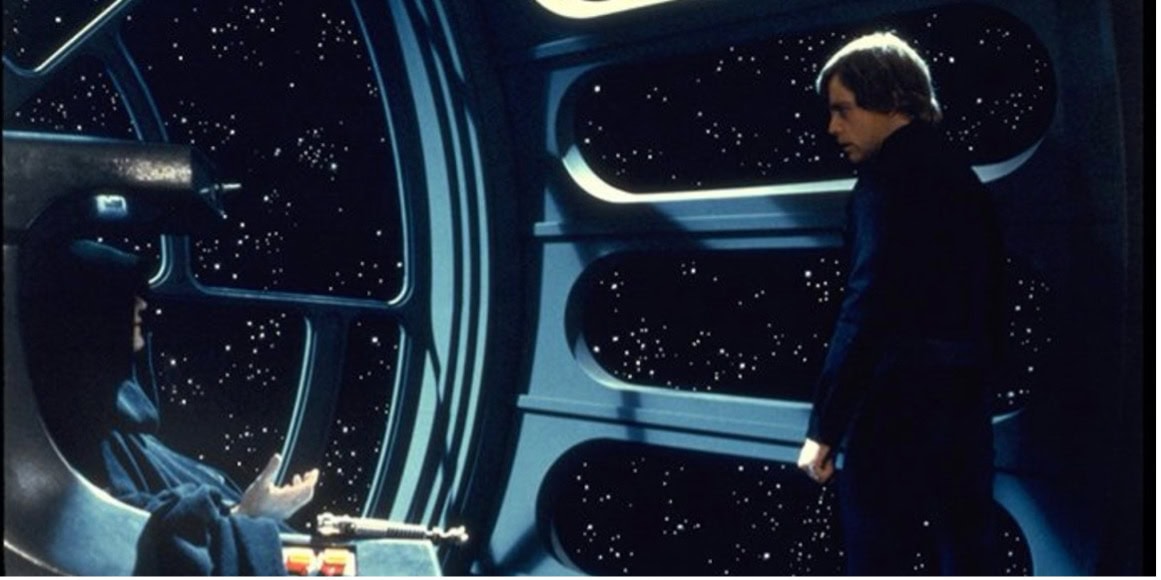
This is the original trilogy at its most morally beautiful. It does not say that emotion is absent. Luke is filled with emotion in that scene. Fear, grief, rage, love, desperation. What matters is that he does not obey the worst of it. He feels deeply and still chooses rightly.
That is the cleanest version of the Jedi ideal: not numbness, but mastery. Luke does not become good because he feels nothing. He becomes good because he feels the full force of the inner storm and refuses to let it choose for him.
Within the original trilogy, it seems like the argument is settled: the Jedi path is the answer, and the Sith path is the corruption of it.
Sixteen years later, the prequels returned to that certainty and began to pull it apart. Star Wars: Episode I – The Phantom Menace (1999), Star Wars: Episode II – Attack of the Clones (2002), Star Wars: Episode III – Revenge of the Sith (2005)
The prequels do this by shifting the Jedi from mythic figures into institutional ones. In the original trilogy, Obi-Wan and Yoda are remnants of a fallen Order, almost hermits, carrying the authority of a moral tradition the audience is asked to trust before it ever really sees it. The Jedi seem noble partly because we encounter them only after they have been destroyed. But the prequels show that tradition alive and at scale: the council chambers, the temple, the rules, the training, the children, the bureaucracy, and the Order’s proximity to political power. The Jedi are no longer a sacred memory. They are an institution. And once we see the institution clearly, its wisdom begins to look less pure.
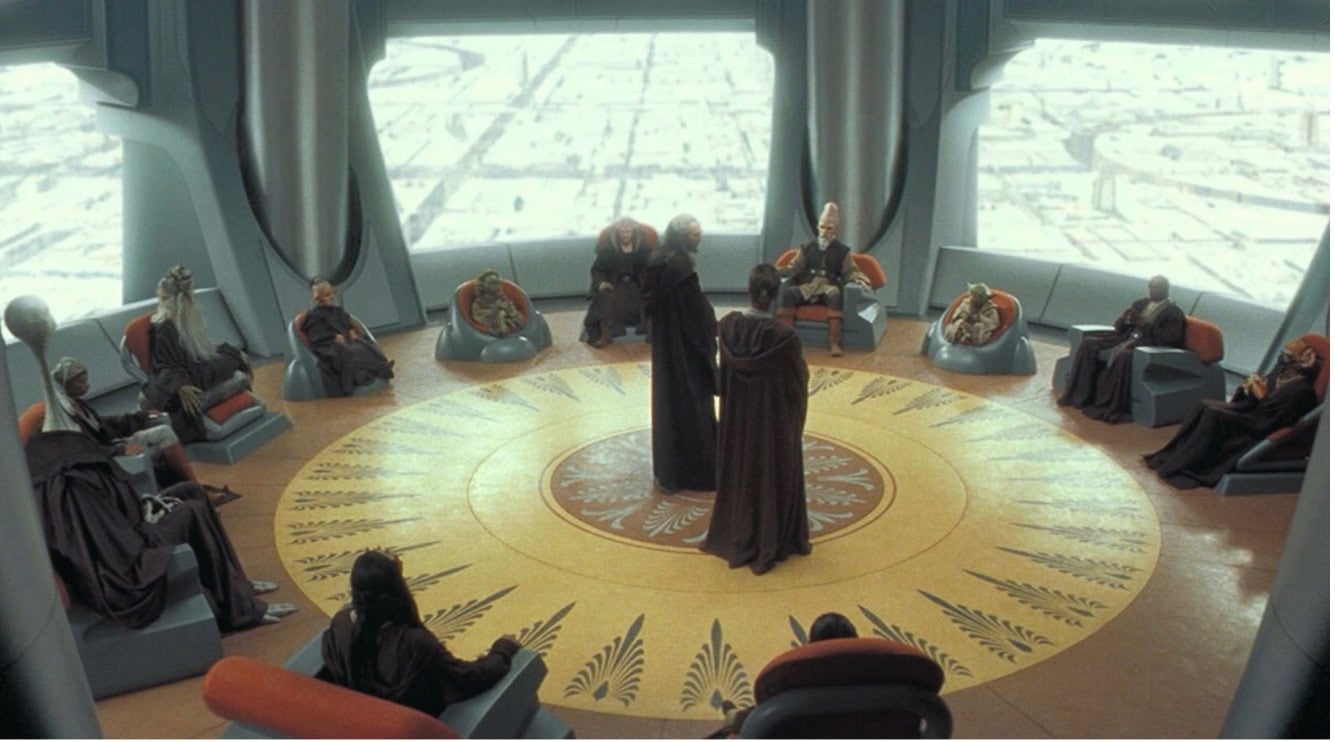
The Jedi Order’s central insight remains powerful. Fear can become anger. Anger can become hatred. Hatred can become suffering. That chain is not mystical nonsense. It is psychologically sharp. Human beings often do terrible things not because they think of themselves as evil, but because they feel threatened, abandoned, humiliated, or powerless. The Jedi are right to take fear seriously.
But the prequels expose what happens when a true insight hardens into doctrine, and doctrine becomes a substitute for wisdom.
The Jedi are right that fear is dangerous, but they are wrong when they treat attachment itself as the danger. They are right that power requires discipline, but they are wrong when discipline becomes suspicion of ordinary human feeling. They are right that the self can be a source of corruption, but they are wrong when they act as though the self can be mastered by refusing to speak honestly about love, grief, desire, terror, and everything else that makes a person human.
Anakin Skywalker is the stress test the Jedi fail.
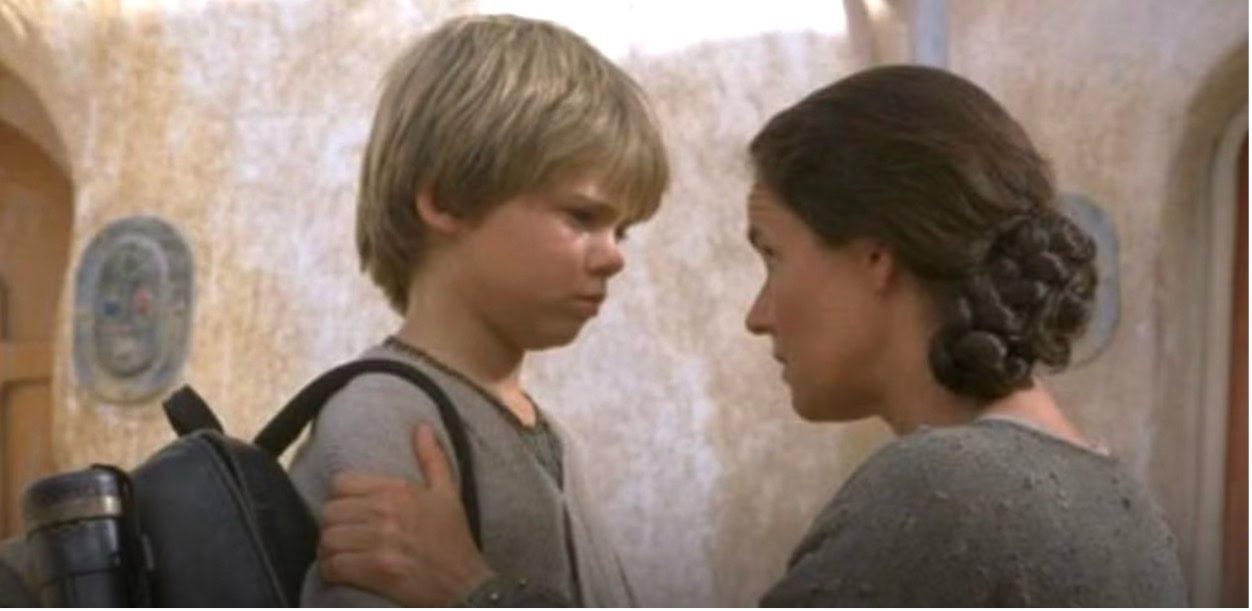
He is not simply an arrogant young man who wants too much. He was born a slave. By the time the Jedi find him, he has already learned that his body, his labor, his home, and his mother’s life are subject to someone else’s control. He is not a blank heroic vessel waiting to be trained. He is a scarred child who has known ownership, fear, poverty, separation, and powerlessness before he has known freedom.
And yet, almost immediately, the terms by which he is understood are cosmic rather than human. Qui-Gon takes his blood, and the test reveals a midi-chlorian count beyond anything the Jedi have ever seen, even higher than Yoda’s. Suddenly, Anakin is not a traumatized boy, but a theological event. A disturbance in the Force. A possible chosen one.
From that moment forward, the Jedi struggle to see him plainly. They are fascinated by his power before they even attempt to understand his pain. They recognize the magnitude of what Anakin might become, but they are far less equipped to understand what has already been done to him. His fear, grief, and attachment are not treated first as the natural wounds of an enslaved child separated from his mother. They are treated as warning signs, institutional risks, even political liabilities to be managed before they become dangerous.
That is the tragedy. Anakin is taken into a world of monks, rules, prophecy, and restraint, then asked to master emotions that no one has helped him sift through, identify, acknowledge, much less feel and grieve. The Jedi Order sees what he might become, but cannot see what he already is.
Anakin is powerful, wounded, proud, frightened, and hungry for belonging. In other words, he is not an abstract moral problem. He is a scared little boy.
The Jedi see the danger in him, but they do not understand his wound. Their commitment to emotional restraint prevents them from meeting Anakin on a fully human level, precisely when his humanity most needs to be seen. Instead, they leave his fear and grief to fester, mistaking the corrosive silence that follows for discipline.
When Anakin fears losing his mother, the system has no adequate language for that grief. When he fears losing Padmé, the system has no adequate language for that love. He is told to let go, but not taught how. He is taught to master himself, but not to understand himself. He is warned that attachment leads to suffering, but not shown how love can exist without possession.
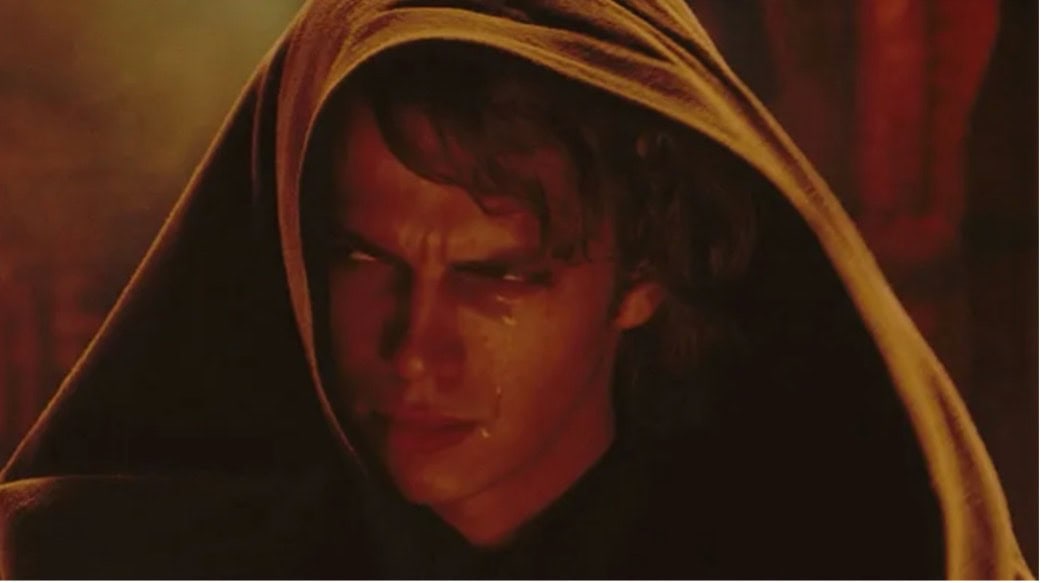
That is the crack through which Palpatine slips.
Palpatine’s seduction works because it does not begin as evil. It begins as recognition. Even more powerfully, it begins as validation. He tells Anakin, in effect: your fear is real. Your love matters. Your desire to save someone is not shameful. The Jedi have limits. There are powers they will not discuss because they are afraid of them.
That simple recognition is intoxicating. Anakin has spent years inside an Order that treats his emotions as dangers to be managed, not wounds to be understood. Palpatine sees the fear, names it, and does not immediately ask him to bury it. Before he offers Anakin power, he offers him the relief of being seen.
This is where the prequels begin to challenge the moral assumptions of the Hero’s Journey itself. In Joseph Campbell’s cleanest version of the myth, the mentor guides the hero toward wisdom, while temptation lures him away from it. But Anakin’s story makes that division harder to trust. In the context of the prequals, the mentors are emotionally inadequate and the tempter is manipulative and destructive, but he is also the first person in power to validate Anakin’s fear, grief, and love as real. The sanctioned path offers doctrine. The forbidden path offers validation.
That reversal does not make Palpatine good, and it does not make the Sith right. But it does reveal how incomplete the Jedi answer has become. If the path of wisdom cannot recognize pain, then the path of temptation will. If the mentor cannot meet the wound, the tempter will.
This is what makes the Sith so alluring. Not the lightning. Not the black robes. Not the villainy. The promise that pain can be answered. The promise that fear can be useful. The promise that love does not have to be surrendered just because a council tells you acceptance is noble.
The Jedi tell Anakin to surrender what he loves. Palpatine tells him he can and should fight for it.
The tragedy is that Palpatine is manipulating Anakin. But the manipulation works because it contains a truth the Jedi have failed to honor. Anakin’s emotions are not imaginary; far from it. His fear is not meaningless. His love is not trivial. His desperation is not a defect that can be disciplined away by lecture.
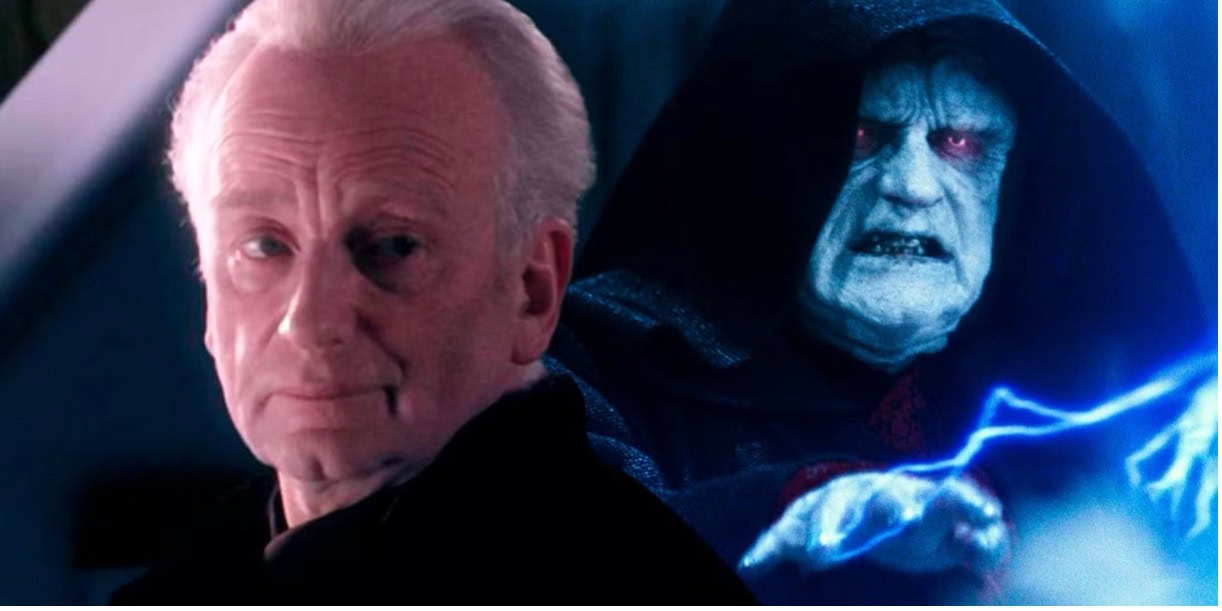
This is where Star Wars becomes more interesting than its own original binary ideology. The Sith are still horrifying. They lie, murder, dominate, and enslave. But their critique of the Jedi is legitimate. The Sith understand that emotion is not a flaw in living beings. It is one of the central engines of life. People create, fight, sacrifice, build, rebel, and love because they care. Any philosophy that treats intensity itself as contamination will eventually fail the people who are most intensely alive.
Anakin does not fall because he loves too much. He falls because he has no honest place to put his love, and because he has been taught to feel ashamed for feeling it at all.
The Sith do not become dangerous because they acknowledge his passion. They become dangerous because they take a real truth, that emotion is powerful, meaningful, and cannot simply be buried, and turn it into a justification for domination.
The Sith begin with a compelling claim: passion is power. Desire is not weakness. Anger can reveal what is intolerable and turn pain into action. Fear can sharpen the will. Pain can become fuel. There is truth here, and anyone who has lived through crisis knows it. Calm is not always virtue. Sometimes calm is cowardice. Sometimes “peace” is the word comfortable institutions use to protect themselves from change.
But Sith philosophy goes much further. It does not merely honor forbidden emotion. It exalts it. It says the emotions the Jedi fear most are not only real, but useful. They can be refined into strength. They can make the powerless feel powerful, the wounded feel invincible, the humiliated feel destined. That is an intoxicating promise, especially to someone as deeply wounded as Anakin.
By the time of the prequels, the Republic is not a shining moral civilization protected by wise monks. It is a slow, compromised, bureaucracy easily manipulated by the very evil it claims to oppose. The Jedi remain loyal to that system, even as it decays around them, and that loyalty begins to compromise their moral authority.
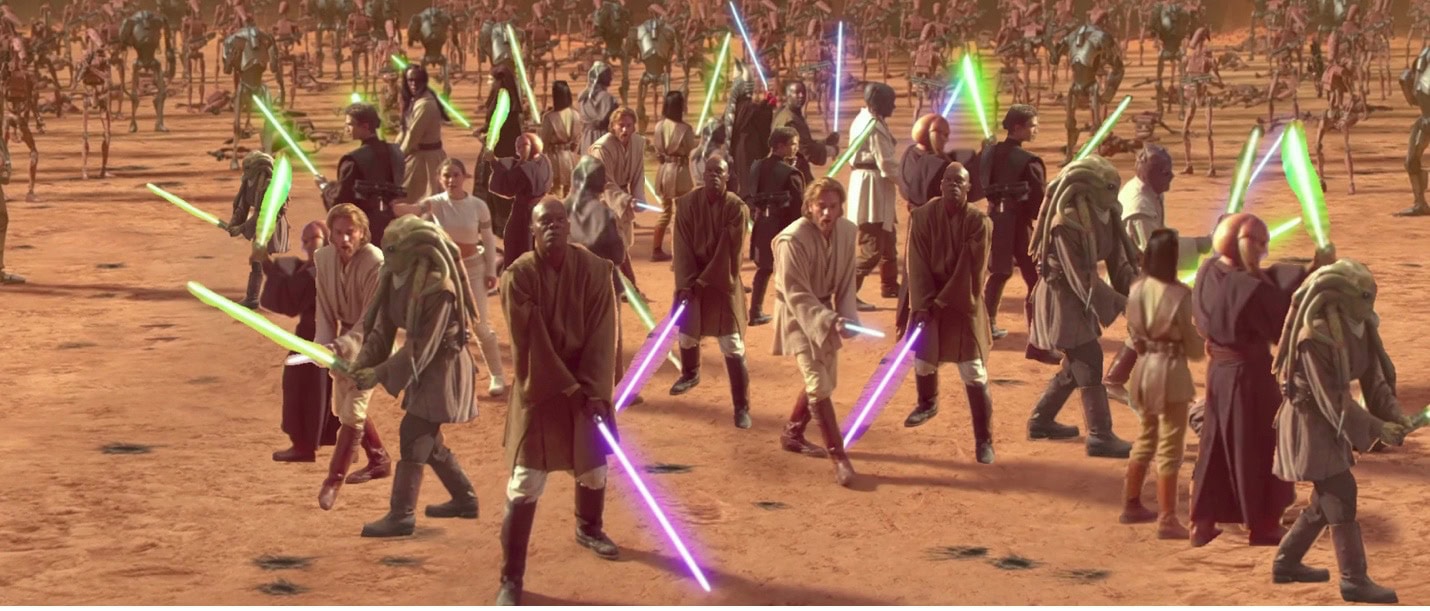
This becomes most obvious during the Clone Wars. The Jedi speak the language of peace, balance, and spiritual restraint, but they are generals in a galactic war. In their own eyes, this is a tragic necessity. They are not warmongers; they are peacekeepers forced into violence by emergency, duty, and the collapse of the Republic around them. But from another point of view, the hypocrisy is glaring. These are warrior monks preaching detachment while leading armies, talking of peace while waging endless war, claiming to serve the Force while acting as military commanders for a failing state.
That contradiction does not make the Sith good, but it does make the Jedi much easier to criticize. Their ideals remain noble, but their role in the galaxy has become entangled with the machinery of power.
The Sith see this weakness clearly. They see stagnation and institutional vanity. They see a Republic too compromised to save itself and a Jedi Order too invested in that Republic to stand fully outside of its corruption. The Sith’s critique is hard to dismiss because it points to something real: the Jedi preach peace while serving power, claim detachment while binding themselves to a failing state, and become soldiers in a war they insist they are only trying to end.
But the Sith answer is catastrophic.
If passion is the source of strength, and strength is the path to power, and power is the path to freedom, then anything that limits the self begins to look like a shackle. Compassion becomes weakness. Loyalty becomes useful only as long as it serves ambition. Other people become instruments, rivals, obstacles, or possessions.
That is not liberation. It is captivity to one’s own fear, hunger, and need for control wearing the mask of freedom.
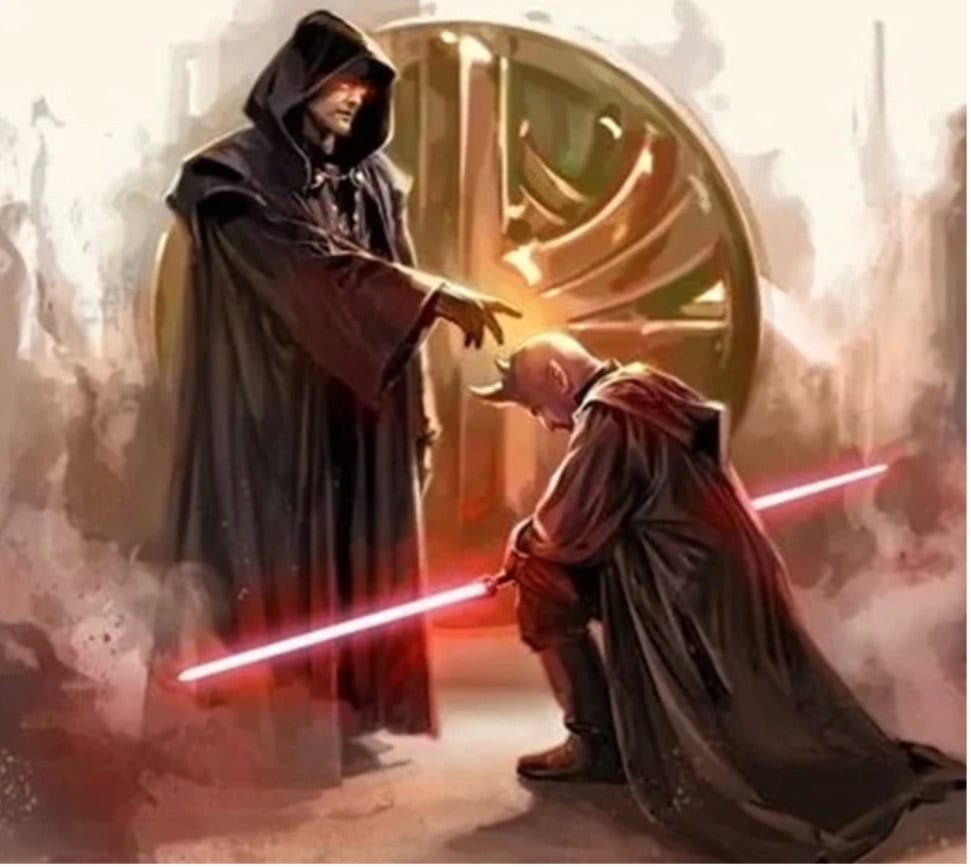
The Rule of Two makes this plain. It is one of the most revealing ideas in Sith philosophy because it shows both their intelligence and their sickness. The Sith understand that a community of people devoted to unlimited personal power will destroy itself. So they impose structure: one master, one apprentice. One to hold power, one to crave it. The apprentice learns until strong enough to overthrow the master. The cycle continues.
As a strategy, it is brilliant. As a moral system, it is diseased.
It turns betrayal into tradition. It makes murder the method of succession. It ensures that intimacy can never become trust because every relationship is ultimately a contest for supremacy. The Sith can produce power, discipline, patience, even genius. What they cannot produce is trust, collaboration or anything remotely close to a healthy civilization.
Their philosophy is not stupid. That is what makes it frightening. It identifies a real weakness in the Jedi, then offers a cure that poisons the whole body, mind, and spirit. It offers self-mastery, but at the risk of making a person dependent on the very anger, fear, pain, and hunger they were trying to master.
Luke’s great throne room choice matters because he escapes both traps.
He does not follow the old Jedi path completely, at least not in its most rigid form. He does not detach from Vader. He does not accept that his father is already lost. He refuses the advice, explicit and implied, that love for his father is a weakness to be overcome. His attachment is not the problem. His compassion is the thing that allows him to see what Obi-Wan and Yoda cannot fully see.
But he also refuses the Sith path. He will not let love become possession. He will not let fear become murder. He will not let anger define the terms of victory. He feels the emotions the Jedi fear most and refuses to make them his master. He experiences the fuel of the dark side and chooses not to burn with it.
That is why the scene endures. Luke does not choose numbness, and he does not choose domination. He chooses compassion.
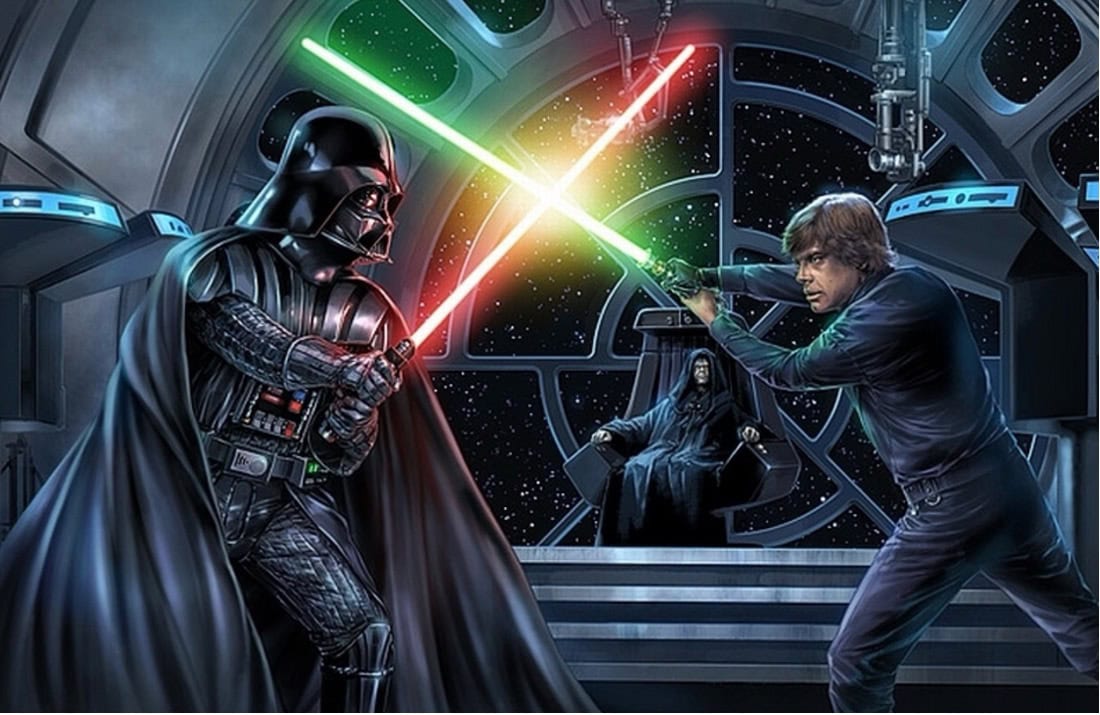
At first, within the original trilogy, this looks like the triumph of the Jedi ideal. Luke has faced fear, anger, grief, love, and temptation, and he has not been ruled by them. He has mastered the storm inside himself. The Jedi were right. The Sith were wrong. Power must be governed by restraint. The hero wins not by becoming stronger than the villain, but by refusing to become him.
But with time the scene becomes more complicated.
Once the prequels reveal the failures of the Jedi Order, Luke’s choice in the throne room begins to look less like obedience to and the execution of the Jedi doctrine, but instead more like a quiet correction of it. Luke does not save Vader by letting go of him. He saves him by insisting, against all evidence, that there is still a person inside the machine. He does not deny love. He disciplines it. He does not suppress grief, fear, or attachment. He holds them without allowing them to curdle into control.
That is not quite the Jedi way, at least not as the prequels show it.
When Anakin goes to Yoda with visions of someone he loves dying, Yoda’s advice is not cruel in intention, but it is tragically inadequate: “Train yourself to let go of everything you fear to lose.” In Jedi terms, this is wisdom. Yoda is warning him against clinging, possession, and panic. But Anakin is not an abstract student asking an abstract question. He is a wounded boy, now grown into a frightened young man, who has already been told again and again that the proper response to pain is restraint.
This is the same cold lesson he has been receiving since he was taken from his mother: do not attach, do not fear, do not grieve too openly, release all emotions you may have around your enslaved childhood, do not let love govern you. Whatever truth exists inside that teaching, it is not enough for Anakin. He comes to Yoda asking, in the only way he can, to be met in his terror, maybe even consoled. Instead, he receives doctrine.
That mismatch is one of the central failures of the Jedi. The dark side is alluring, but it is not alluring in a vacuum. It becomes alluring because the Jedi are so woefully inadequate at recognizing and addressing such big emotions as pain. Their emotional restraint, at its worst, becomes cold indifference. And for Anakin, that indifference is devastating. Palpatine does not have to invent Anakin’s wound. He only has to be the first powerful person in his life willing to acknowledge it.
That is why Luke’s throne room choice is so unique. Luke finds a healthier path than either inherited system. The Jedi fear that love will become attachment, and attachment will become suffering. The Sith take suffering and convert it into power. Luke lets love remain compassionate without allowing it to become possessive. He feels deeply, but he does not cling. He refuses hatred, but he also refuses detachment.
For a moment, Star Wars seems to have found its answer.
Luke can make the right choice in one impossible moment, but that does not mean he knows how to build an order, train a generation, or create a durable system that can teach others to make the right choice under different pressures. The throne room is a revelation, but revelations can be ephemeral. They do not automatically become schools, traditions, policies, or habits. They have to be translated, again and again, and translation is where distortion can easily enter.
This is the importance of the sequel trilogy: The Force Awakens (2015), The Last Jedi (2017), and The Rise of Skywalker (2019). It refuses to leave Luke’s victory untouched. It asks what happens after that mythic triumph, when the hero has to become the teacher.
The answer is uncomfortable: he fails.
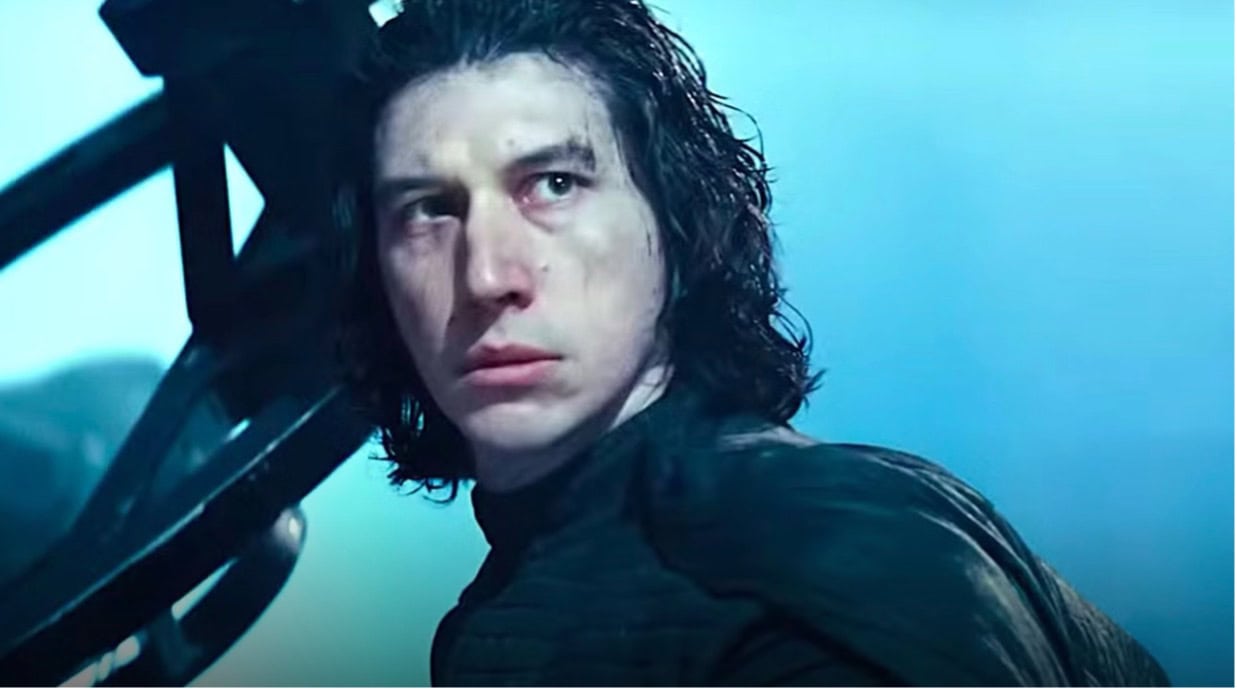
We see that failure most clearly in the competing accounts of what happened between Luke and Ben Solo, the son of Han and Leia and Luke’s own student. Sensing darkness in Ben and seeing a vision of the destruction he might one day cause, Luke enters his room while Ben sleeps. For one terrible instant, Luke sees not his nephew, not his student, not a wounded young man still capable of being reached, but a future catastrophe that must be stopped before it happens. He ignites his lightsaber. He does not strike. But Ben wakes and sees his master standing over him with a weapon. Whatever Luke intended, Ben experiences the moment as betrayal, pure and simple.
Luke’s failure with Ben Solo is not the clean execution of Jedi doctrine. No serious reading of the Jedi path would call it wise to murder your sleeping student. It is instead a human failure: a flash of fear, shame, and panic from a teacher who sees catastrophe before it happens and mistakes prevention for wisdom.
But it is also a failure shaped by Jedi doctrine. Luke has inherited a tradition that treats inner darkness as a threat to be contained, perhaps even exterminated, before it becomes uncontrollable. In that moment, Luke sees Ben less as a wounded student to be understood than as a future disaster to be stopped. The doctrine does not command Luke’s mistake, but it helps create the conditions in which that mistake feels, for one terrible second, like responsibility.
This moment has angered some viewers because it seems to contradict the Luke who saved Vader. But philosophically, that tension is the point. In the throne room, Luke’s triumph was not that he perfectly obeyed Jedi doctrine. His triumph was that he exceeded it. He looked at Darth Vader, a monster by every visible measure, and still saw a wounded person capable of return.
With Ben, he fails to do the same. For one terrible moment, Luke does not see a frightened student, a wounded nephew, or a young man still capable of being reached. He sees a future catastrophe. That is the old Jedi failure in its most concentrated form: the inner life of a powerful young person becomes a danger to be “managed” before it becomes a disaster.
That is not a betrayal of Star Wars. It is Star Wars becoming honest about the limits of its original myth. Luke discovered something the Jedi needed: compassion strong enough to see the deeply wounded person inside the threat. But Luke had not yet turned that discovery into a practice, much less a tradition. In the throne room, Luke saw past Vader’s darkness. With Ben, for one decisive second, he saw only the darkness.
By the time the story reaches Rey and Kylo Ren, the old categories are still present, but they no longer feel sufficient.
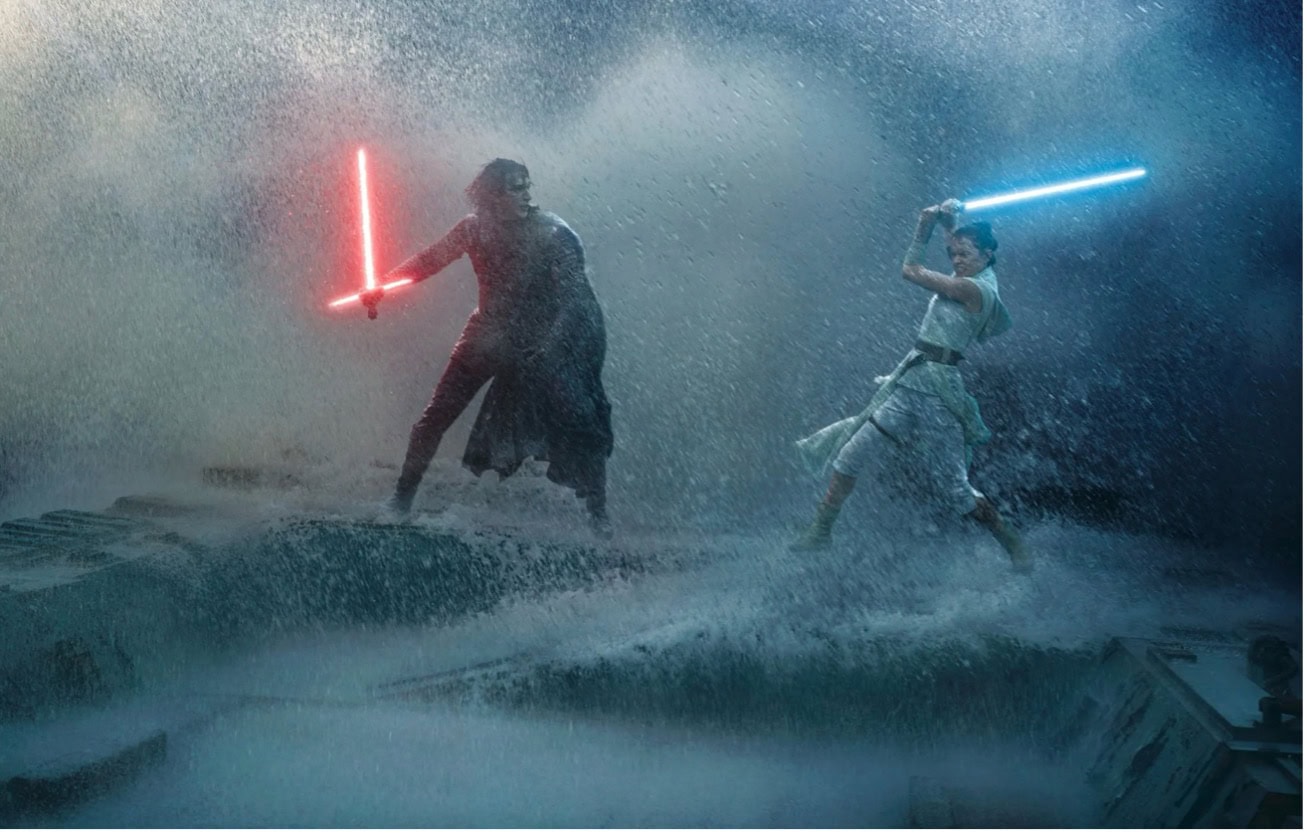
Kylo Ren is not Darth Vader, though he tries desperately to be. He is not a classical Sith in the grand, disciplined, Rule-of-Two sense. He is something more unstable and modern: a young man trying to build an identity by rejecting everyone who loved him and everything he inherited. As the son of Han and Leia, the nephew of Luke, and the grandson of Anakin Skywalker, he is trapped inside a heroic legacy he cannot bear. Darkness offers him a way out. If he can become feared enough, ruthless enough, and powerful enough, maybe he will no longer feel weak, divided, or unsure of who he really is.
Kylo understands the Sith promise at its most seductive: if pain makes you weak, turn pain into power. If love leaves you vulnerable, destroy the part of yourself that loves. If the past imprisons you, burn it to the ground. But his violence does not free him. Killing his father, Han Solo, does not make him stronger in any meaningful sense. It breaks him even further. Kylo tries to become Vader, but he misunderstands Vader’s ending. Vader’s final act was not domination. It was repentance.
Kylo exposes the adolescent weakness in Sith ideology: the fantasy that pain can be solved by becoming too powerful to be wounded again. He mistakes intensity for mastery. He believes he is commanding the storm, when in truth the storm is commanding him.

And then Rey enters the story as his opposite. Kylo is burdened by inheritance. Rey is starved for it. Kylo is the child of galactically famous parents, the nephew of a legend, the grandson of Darth Vader. She begins as no one, abandoned on Jakku, scavenging the wreckage of wars and stories that belong to other people.
If Kylo’s temptation is to escape the past by destroying it, Rey’s temptation is to give herself away to anyone who might finally give her a place inside it. Her deepest wound is abandonment, and that wound makes belonging feel like salvation. She wants a name, a family, a lineage, a role in the story. The longing is deeply human, but it is also dangerous because it makes her vulnerable to anyone who offers recognition, inheritance, or purpose. She could mistake being chosen for being loved, mistake someone else’s legacy for her own identity, and mistake permission for destiny.
But Rey’s journey is not about eliminating her longing for identity, or pretending desire has no place in her life. It is about deciding what that longing will serve. The Jedi answer would be to release the need for belonging before it becomes attachment. The Sith answer would be to convert that hunger into power. But Rey’s path is different from both. She has to learn that being wounded does not mean she must be claimed, defined, or rescued by someone else. Where Kylo tries to solve pain by becoming too powerful to be wounded again, Rey learns that pain can be acknowledged without being allowed to choose her identity.
Her connection with Kylo is important because it is not primarily doctrinal. They are not debating the Jedi Code and Sith Code in abstract terms. Through their forced intimacy across the films, they begin to recognize each other as people: wounded, lonely, powerful, angry, frightened, and still capable of choice. They see one another uncomfortably, unwillingly, incompletely, but truly enough that neither one can reduce the other to a category: Jedi or Sith, enemy or savior, monster or victim, legacy or threat.
That is where the franchise moves beyond its original myth. The Force becomes less about membership in the correct order and more about moral responsibility inside relationship. Rey becomes the evolution of Luke’s throne room revelation. Luke discovered, in one luminous moment, that compassion could interrupt the old cycle of fear and domination. Rey inherits that discovery and turns it from a single heroic act into a way of living.
She does not merely preserve the Jedi tradition or refuse the Sith one. She is a synthesis of what both traditions understand and what both fail to hold. She feels anger, fear, longing, and love, but she does not surrender her judgment to them. She seeks strength, but not domination. She chooses compassion, but not self-erasure. Rey does not become good because she has no anger. She becomes good because she chooses what her anger will serve. She does not become free because she has no fear. She becomes free because fear does not get the final vote.
And most importantly, Rey inherits Luke’s unfinished discovery: compassion is neither Jedi detachment nor Sith possession. Luke’s throne room triumph was not that he stopped loving his father, nor that he surrendered to the rage the Emperor tried to provoke. It was that he found a third way. He remained emotionally alive without being emotionally ruled. He loved Vader without trying to control him, and he felt anger without letting anger decide what he would do.
Rey carries that discovery forward. She does not eliminate longing, fear, anger, or love. She learns to hold them without handing them command. Her compassion is not passivity or self-erasure. It is the disciplined choice to see another person clearly without excusing them, to believe redemption is possible without surrendering judgment, and to remain open to love without abandoning responsibility or selfhood. Compassion is not the absence of discipline. It may, in fact, be the highest form of it.
This is the answer the later franchise offers in place of the original myth’s certainty: not pure Jedi detachment, not Sith intensity, not feeling nothing, and not being ruled by feeling. Instead, it offers compassion disciplined by judgment, strength restrained by responsibility, and love that does not become control.
It is far less perfect than the answer the original myth gave us. It is also far more adult.
Across nearly fifty years, Star Wars moves from certainty to complexity.
It begins with a clean myth: the hero must master himself, follow wisdom, reject temptation, and defeat evil. The Jedi seem to hold the complete answer. The Sith seem to represent everything that answer must overcome.
Then the story grows.
The Jedi become an institution, and their wisdom hardens into rigidity. The Sith become more than monsters, and their philosophy reveals the power of truths the Jedi repress. Luke appears to prove the Jedi right, but over time his choice reveals something more surprising: he did not triumph because he obeyed the Jedi perfectly. He triumphed because he added what the Jedi had forgotten. Compassion.
Rey inherits that unfinished discovery. Not as a doctrine, not as a restored Jedi rulebook, and not as a clean rejection of the Sith. She inherits it as a question: how does a person remain open to love, anger, fear, longing, and power without being ruled by them?
This is why the franchise becomes more accurate as it expands. Not tidier, but more accurate in its messiness.
Because life does not actually divide itself into serenity and passion, restraint and freedom, light and dark, as neatly as the first myth suggests. People need discipline, but they also need feeling. They need restraint, but also agency. They need to master fear, but also admit that fear exists, and even feel it deeply. They need institutions, but institutions must remain humble enough to recognize when their inherited wisdom has become a shield against reality.
The Jedi are right that power without restraint becomes violence. The Sith are right that emotion denied does not disappear but instead metastasizes. The Jedi are right that fear, anger, grief, and desire can corrupt judgment. The Sith are right that those same emotions can also produce strength, clarity, momentum, and transformation. The Jedi are wrong when they confuse love with possession. The Sith are wrong when they confuse freedom with domination. And both are incomplete without compassion.
That is the deeper argument Star Wars eventually discovers. Balance is not the midpoint between Jedi and Sith. It is not half-control and half-chaos. It is not choosing between feeling nothing and being ruled by feeling.
Balance is the much harder discipline of living with power and emotion at the very same time. It is the practice of feeling fear without becoming cruel, feeling anger without becoming possessed, feeling love without turning it into control, and seeking strength without losing tenderness.
Compassion is what keeps restraint from becoming cold. It is what keeps passion from becoming predatory. It is what allows power to remain human. That cannot be solved once. It must be practiced, again and again.
The first Star Wars gave us a mythic answer. The larger franchise gives us something harder: a myth that learns to doubt its own answer without abandoning the need for one. That is why the story endures. Not because it stayed pure, but because it did not. It began with a farm boy, a mentor, a villain, and a destiny. It became a long debate about whether goodness can survive power, whether feeling can survive discipline, and whether any tradition can remain wise after it becomes certain of itself.
The early films tell us what to believe. The later films ask what belief costs. And in that shift, Star Wars becomes less perfect, and so much more true.