Hollywood Follows the Audience. Film Festivals Find the Artist.
Dodd Loomis
June 10, 2026
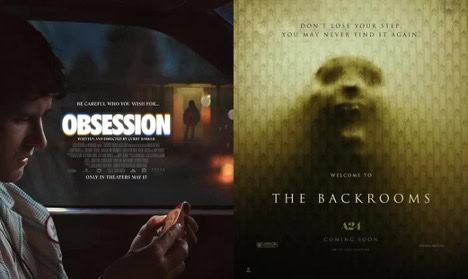
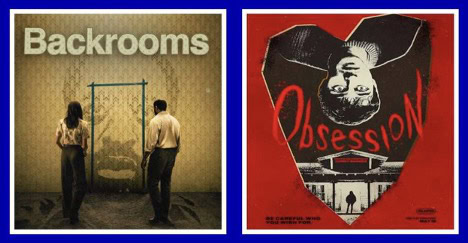
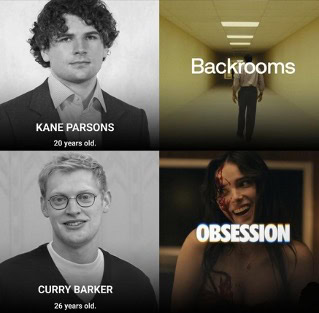
Over the past few weeks, two films have sent shockwaves through the entertainment industry. Kane Parsons, the 20-year-old creator behind the viral Backrooms YouTube series, watched his debut feature, Backrooms, open to more than $81 million domestically and roughly $118 million worldwide. Entertainment Weekly reported that the film became A24’s biggest box office premiere and made Parsons the youngest director to open a film at No. 1. The Guardian and People reported the same milestone around Parsons’ age and box office achievement.
At the same time, Curry Barker’s Obsession has become one of the year’s most surprising theatrical stories. The Hollywood Reporter stated that the film’s second weekend increased by 39.4%, an almost unheard-of reversal of the normal horror-movie pattern, where opening weekend is usually followed by steep decline. Variety also covered Obsession as a major low-budget box office breakout, noting its strong second weekend and Memorial Day performance.
The industry response has been immediate and perhaps even predictable: “The gatekeepers are dead.” “Hollywood has changed forever.” “The future belongs to creators.” “YouTubers have broken the studio system.”
There is truth in the excitement. Parsons and Barker deserve to be celebrated. Building an audience of millions is extraordinarily difficult. Creating work that resonates deeply enough to travel from online platforms to theatrical exhibition requires talent, discipline, persistence, and a genuine connection with viewers. The leap from short-form digital storytelling to feature filmmaking is substantial, and both filmmakers have demonstrated that serious cinematic voices can emerge from places the traditional industry once overlooked.
However I am not convinced these films mean what many commentators seem to think they mean. The prevailing narrative is that Hollywood has suddenly become more willing to take risks on young, untested talent.
I see something different. I see Hollywood doing what Hollywood has always done: pursue audiences. The only thing that has changed is where those audiences are coming from.
To understand this moment, we first need to acknowledge how dramatically the film industry itself has changed over the past decade. The rise of streaming altered audience behavior and collapsed old assumptions about what belonged in theaters and what belonged at home. During the streaming boom, studios and platforms spent billions producing content at unprecedented scale. Then came the pandemic, which disrupted theatrical exhibition around the world. After that came a massive streaming correction, labor strikes, rising production costs, and a broader industry contraction that many filmmakers, producers, and crew members are still very much experiencing in real time.
The result has been a more cautious Hollywood, particularly around theatrical releases. Since COVID, the kinds of movies that receive major theatrical investment have become increasingly concentrated around projects that arrive with a built-in audience.
Again and again, the industry has returned to stories, characters, worlds, and fanbases that arrive preloaded with recognition. This is often criticized as creative exhaustion, and sometimes it is. But at its core, it is a business calculation. Studios are deploying enormous amounts of capital into projects with increasingly uncertain outcomes. Faced with that uncertainty, they have gravitated toward material that comes with evidence of demand.
That is why I do not believe Backrooms and Obsession represent a radical departure from Hollywood’s current logic. They represent a very simple extension of it. The mistake would be to confuse the artist with the asset. Parsons and Barker are talented filmmakers. Their success is real. But from Hollywood’s perspective, the audiences they had already built were very much a part of the package, if not the package entirely. What I’m saying is that the audience was the asset all along.
For years, a built-in audience has meant a New York Times bestseller, a Marvel character, a well-known video game, a major movie star, and a beloved animated film ready to be remade in live action. Below is a list of films that were financed and received theatrical release since COVID.
Sequels.
(Bad Boys for Life (2020), A Quiet Place Part II (2021), F9: The Fast Saga (2021), No Time to Die (2021), Venom: Let There Be Carnage (2021), Spider-Man: No Way Home (2021), Scream (2022), Sonic the Hedgehog 2 (2022), Doctor Strange in the Multiverse of Madness (2022), Top Gun: Maverick (2022), Jurassic World Dominion (2022), Minions: The Rise of Gru (2022), Thor: Love and Thunder (2022), Black Panther: Wakanda Forever (2022), Avatar: The Way of Water (2022), Creed III (2023), John Wick: Chapter 4 (2023), Guardians of the Galaxy Vol. 3 (2023), Fast X (2023), Spider-Man: Across the Spider-Verse (2023), Mission: Impossible, Dead Reckoning Part One (2023), The Equalizer 3 (2023), The Nun II (2023), Aquaman and the Lost Kingdom (2023), Dune: Part Two (2024), Ghostbusters: Frozen Empire (2024), Godzilla x Kong: The New Empire (2024), Kingdom of the Planet of the Apes (2024), Bad Boys: Ride or Die (2024), Inside Out 2 (2024), A Quiet Place: Day One (2024), Twisters (2024), Deadpool & Wolverine (2024), Beetlejuice Beetlejuice (2024), Joker: Folie à Deux (2024), Gladiator II (2024), Moana 2 (2024), Mufasa: The Lion King (2024), Sonic the Hedgehog 3 (2024), Den of Thieves 2: Pantera (2025), Bridget Jones: Mad About the Boy (2025), Final Destination: Bloodlines (2025), 28 Years Later (2025), Mission: Impossible, The Final Reckoning (2025).
Reboots.
The Invisible Man (2020), Mortal Kombat (2021), Candyman (2021), The Matrix Resurrections (2021), Scream (2022), The Batman (2022), Firestarter (2022), Evil Dead Rise (2023), The Exorcist: Believer (2023), Teenage Mutant Ninja Turtles: Mutant Mayhem (2023), The Little Mermaid (2023), The Color Purple (2023), Mean Girls (2024), The Crow (2024), Twisters (2024), Nosferatu (2024), The Karate Kid: Legends (2025), The Naked Gun (2025), I Know What You Did Last Summer (2025), Superman (2025), The Fantastic Four: First Steps (2025).
Cinematic universes.
Black Widow (2021), Shang-Chi and the Legend of the Ten Rings (2021), Eternals (2021), Spider-Man: No Way Home (2021), Doctor Strange in the Multiverse of Madness (2022), Thor: Love and Thunder (2022), Black Panther: Wakanda Forever (2022), Ant-Man and the Wasp: Quantumania (2023), Guardians of the Galaxy Vol. 3 (2023), The Marvels (2023), Deadpool & Wolverine (2024), Captain America: Brave New World (2025), Thunderbolts (2025), Wonder Woman 1984 (2020), The Suicide Squad (2021), Black Adam (2022), Shazam! Fury of the Gods (2023), The Flash (2023), Blue Beetle (2023), Aquaman and the Lost Kingdom (2023), Joker: Folie à Deux (2024), Superman (2025), Godzilla vs. Kong (2021), Godzilla x Kong: The New Empire (2024), Venom: Let There Be Carnage (2021), Morbius (2022), Madame Web (2024), Venom: The Last Dance (2024), Kraven the Hunter (2024), The Conjuring: The Devil Made Me Do It (2021), The Nun II (2023).
Bestselling novels.
Dune (2021), Where the Crawdads Sing (2022), Death on the Nile (2022), A Man Called Otto (2022), Are You There God? It’s Me, Margaret. (2023), Oppenheimer (2023), A Haunting in Venice (2023), The Color Purple (2023), The Boys in the Boat (2023), Dune: Part Two (2024), It Ends with Us (2024), The Watchers (2024), The Wild Robot (2024), Wicked (2024), The Amateur (2025), Bridget Jones: Mad About the Boy (2025), The Long Walk (2025), The Life of Chuck (2025), The Running Man (2025).
Comic books.
Wonder Woman 1984 (2020), Black Widow (2021), Shang-Chi and the Legend of the Ten Rings (2021), Venom: Let There Be Carnage (2021), Eternals (2021), The Suicide Squad (2021), Spider-Man: No Way Home (2021), The Batman (2022), Morbius (2022), Doctor Strange in the Multiverse of Madness (2022), Thor: Love and Thunder (2022), Black Adam (2022), Black Panther: Wakanda Forever (2022), Ant-Man and the Wasp: Quantumania (2023), Shazam! Fury of the Gods (2023), Guardians of the Galaxy Vol. 3 (2023), Spider-Man: Across the Spider-Verse (2023), The Flash (2023), Blue Beetle (2023), The Marvels (2023), Aquaman and the Lost Kingdom (2023), Madame Web (2024), Deadpool & Wolverine (2024), Joker: Folie à Deux (2024), Venom: The Last Dance (2024), Kraven the Hunter (2024), Captain America: Brave New World (2025), Thunderbolts (2025), Superman (2025), The Fantastic Four: First Steps (2025).
Video games.
Sonic the Hedgehog (2020), Monster Hunter (2020), Mortal Kombat (2021), Uncharted (2022), Sonic the Hedgehog 2 (2022), The Super Mario Bros. Movie (2023), Gran Turismo (2023), Five Nights at Freddy’s (2023), Borderlands (2024), Sonic the Hedgehog 3 (2024), A Minecraft Movie (2025), Until Dawn (2025), Mortal Kombat II (2025).
Live-action adaptations of animated films audiences already know by heart.
Mulan (2020), Tom & Jerry (2021), Cruella (2021), The Little Mermaid (2023), Lilo & Stitch (2025), How to Train Your Dragon (2025), Snow White (2025).
What is new is that Hollywood has now added to the list creators with millions of subscribers, hundreds of millions of views, and an intensely engaged online community. That is not a revolution in Hollywood’s risk tolerance. That is the exact same risk calculation applied to a new category. And that calculation did not stop with recognizing a new mobilizable audience. That calculation also shaped their appropriate budgets.
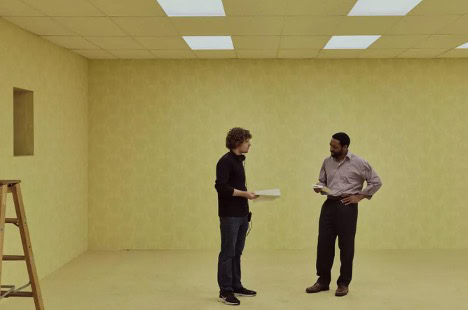
One of the most important parts of this story is how small the budgets of these films were. Obsession was reportedly made for less than $1 million. Backrooms was reportedly made for roughly $10 million. To most people, those numbers might sound big, but by Hollywood standards, they are tiny. These were not blank-check bets. These budgets were meticulously sized risks.
If a studio believes a filmmaker has millions of highly engaged followers, the question becomes brutally practical: how many of those followers need to buy a ticket for a solid return on investment? If even a modest percentage shows up opening weekend, a micro-budget film can begin to justify itself very quickly. In that context, giving a 20-year-old filmmaker a shot is not reckless. It is thoughtfully calculated.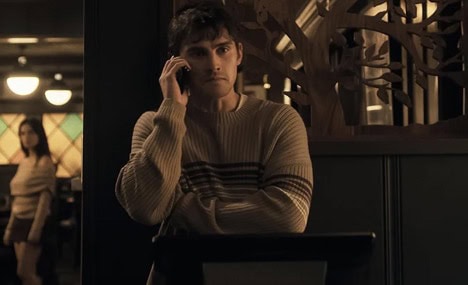
This does not mean the outcome was guaranteed, because of course it was not. Marketing costs, distribution fees, exhibitor splits, and audience response all matter, but the logic is clear. If the budget is low enough and the audience is visible enough, the risk becomes manageable. And that is the point. Hollywood did not suddenly abandon caution and fund the dreams of two young artists. Hollywood paired a clearly identified audience with a tightly controlled budget, deployed capital and then reaped the rewards. That is not artistic recklessness. That is disciplined risk management executed to perfection.
It is Show Business after all.
But this is also where the conversation becomes more complicated. Micro-budget filmmaking can create real opportunity. It can allow emerging directors to make work outside the usual machinery of studio production. But when a micro-budget film becomes a massive commercial success, difficult questions follow: who carried the risk, who absorbed the sacrifice, and who shares in the upside?
Forbes recently reported that Obsession art director Sally Choi said she made $6,761 after taxes on the film, at a rate of $300 per day, and that many crew members were volunteers. The article also noted that these arrangements were made before anyone knew the film would become a major hit. Both things can be true: the original terms may have reflected the reality of a tiny production, and the film’s extraordinary success still raises fair questions about how cast and crew share in that success.
That does not invalidate the film’s achievement or diminish Barker’s talent. But the romance of the micro-budget success story can obscure the labor underneath it.
If we are going to celebrate new pathways into cinema, we also have to ask what kind of creative ecosystem those pathways create. Opportunity should not depend on invisible labor, and the future of independent film should be measured not only by who gets the chance to direct, but also by how the people making the work are valued along the way.
What makes Backrooms particularly fascinating is that A24 was not simply investing in a young filmmaker. It was investing in a phenomenon that young filmmaker set into motion. Parsons had already built a global audience around the Backrooms mythology through years of online storytelling. The feature was based on his web series, itself rooted in the broader Backrooms creepypasta and liminal-space internet culture. The Guardian described the film as based on Parsons’ viral YouTube series, and Entertainment Weekly similarly connected the feature’s success to his online origins. Parsons built something that people cared about before Hollywood arrived. Hollywood recognized the audience. Hollywood controlled the budget. Then Hollywood scaled the opportunity.
Now Obsession tells a slightly different story. Barker’s online following undoubtedly helped create awareness and gave the industry a reason to pay attention. But the film’s box office behavior suggests something more than fan conversion. Movies usually decline after opening weekend, especially horror films. Obsession grew. The Hollywood Reporter reported its second weekend increase as a record-smashing 39.4 percent. That kind of performance is not explained by subscribers alone. That is word of mouth. And that distinction matters, because an online following can open the door, but it cannot carry a film forever. The film still has to deliver.
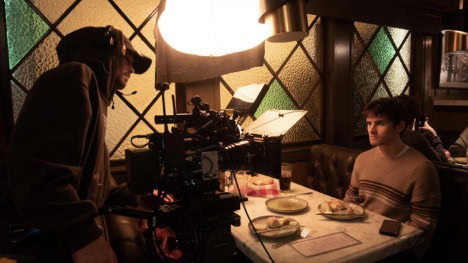
In that sense, the lesson of Backrooms and Obsession is not simply that YouTubers can sell tickets. The lesson is more complicated and more interesting. Internet-native creators can build audiences outside the traditional system. Those audiences can reduce perceived risk for studios and distributors, especially when the budgets are kept low enough to make the math attractive. But theatrical success still depends on whether the work connects beyond the original fanbase.
And that is where the conversation becomes important for those of us who care about independent film, artist development, and the future of cinematic discovery.
Because if Hollywood is increasingly looking for artists who arrive with an audience already attached, then we have to ask harder questions:
- What happens to the filmmaker whose talent exists before the metrics?
- What happens to the artist who has not yet accumulated subscribers?
- What happens to the director whose first great work is not attached to a franchise, a bestseller, a video game, a remake, or a preexisting online community?
- Who believes in that filmmaker before the market does?
This is where film festivals and film societies become essential. Hollywood and film festivals serve different functions within the cinematic ecosystem.
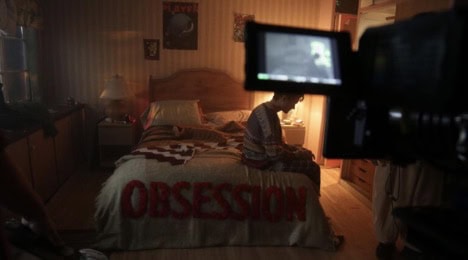
Hollywood asks: Can this project attract an audience?
Film festivals ask: Does this artist deserve an audience?
Those are not competing questions. They are complementary ones. Studios are often tasked with scaling demand. Film festivals are tasked with identifying talent before demand can even be measured.
At the New Orleans Film Society, this is not an abstract idea. It is the work.
Through programs like the Emerging Voices Directors Lab, South Pitch, and the Southern Producers Lab, we work with filmmakers long before there is any measurable market demand for their work. These artists are not selected because they have millions of followers, viral videos, or a proven commercial audience. They are selected because they possess something harder to quantify: talent, vision, originality, discipline, and the potential to create meaningful work.
The same principle guides the New Orleans Film Festival. Each year, thousands of filmmakers submit their work for consideration. Fewer than two percent are selected. At the center of that process is artistic judgment. Our programmers are evaluating storytelling, artistic voice, technical craft, emotional intelligence, originality, and the ability of a film to move, challenge, surprise, and inspire an audience. That is the foundation.
Of course, festivals do not operate in a vacuum. We also think carefully about audience engagement, press interest, industry relevance, community connection, sponsor and donor alignment, and whether a film can live meaningfully inside the larger festival we are building.
Audience matters, but it is not the standard by which the work is judged. It is one factor among many, and it does not drive the bus. A film with no built-in audience can still be essential. A filmmaker with no following can still have a voice we believe audiences need to encounter. That is the distinction.
In a commercial marketplace, preexisting demand can determine whether a project gets financed. At a film festival, the stronger question is not simply how many people already care. It is whether the work gives people a reason to care.
The barrier to entry is not popularity. Instead, it is the strength of the work, and the belief that the work deserves to be placed in conversation with an audience.
For many filmmakers, a festival screening is the first time their work is placed before audiences, critics, distributors, financiers, and industry professionals. It can be the moment a career begins, the moment an artist begins to truly believe in themself. That role played by a film festival matters more, not less, in an industry increasingly shaped by measurable demand.
Film festivals operate on a different timeline than Hollywood. More and more, Hollywood invests after an audience has been proven. Film festivals invest before an audience even exists. Neither approach is inherently better. Both are necessary.
Without the commercial marketplace, many great films would never reach broad audiences. Without festivals, labs, fellowships, artist development programs, and cultural institutions, many great filmmakers would never receive their first meaningful opportunity. That is why the success of Backrooms and Obsession should be celebrated without being misunderstood.
These films do not prove that Hollywood has become fearless. They prove that talent can emerge from unexpected places, and that audiences can be built outside traditional industry structures, and that carefully controlled budgets can make unusual opportunities possible. And that is exciting.
But they also prove something more familiar: Hollywood remains deeply interested in projects that arrive with evidence of demand, especially when that demand can be paired with a budget small enough to make the risk manageable.
Sometimes that demand comes from a bestselling novel. Sometimes it comes from a comic book. Sometimes it comes from a video game. Sometimes it comes from a beloved animated film being remade in live action. Sometimes it comes from simply leveraging the largess of A-list talent (by attaching George Clooney to your film, whether the film is good or not, the producer can immediately raise 20 million for production) And now… sometimes it comes from YouTube.
The platform has changed. The calculation has not.
For film festivals, the responsibility is different. Our job is to help audiences discover artists before the market has decided what they are worth. Some filmmakers will build their own audiences online. Others will emerge through film schools. Others will arrive through festivals, labs, grants, community organizations, and regional film societies. The lesson is not that one pathway has replaced another. The lesson is that talent can emerge from anywhere. The future of cinema depends on whether we are willing to recognize and support that talent wherever it appears.
Kane Parsons and Curry Barker deserve their success. Their work demonstrates that remarkable filmmakers can emerge from platforms the traditional film industry once treated as peripheral. Their achievements should expand our imagination of where cinematic talent can come from. But some of the most important filmmakers of tomorrow have not yet found their audience. Some are making films in garages and shooting on borrowed equipment. Some are submitting to festivals with no representation, no distributor, no fanbase, and no guarantee that anyone will pay attention. Some are developing projects through artist labs and mentorship programs. Some are working on a first feature that may never generate a billion views. And somebody has to believe in them before the market does.
That has always been the role of film festivals and film societies, and it remains our role today.